Programs offer hope for those crippled by shyness
Your heart is racing. You begin to sweat. Your face turns red. Your thoughts are cloudy.
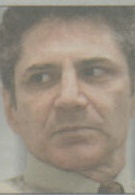
Stephen Schmitt / The Journal News
Group leader Charles di Cagno at the White Plains Medical Center's "Public Speaking & Social Anxiety" workshop.
Eileen Tucci of West Nyack is describing the panic she experienced every time she had to speak in public. And as a "part-time office worker and full-time mother," those situations were becoming increasingly frequent.
"I'd be in a meeting, or on the board of the PTA, and I'd have to get up and say something, and it was so unbelievably anxiety-provoking," she says. "My anxiety was just crippling."
Over time, Tucci became ashamed of her inability to speak up about issues that concerned her children.
"You think you're the only one," she explains.
In fact, she is far from alone.
Emanuel Maidenberg, associate director of the UCLA Social Phobia and Performance Anxiety Clinic, says 13 percent of Americans suffer from social anxiety, making it the third most common mental-health problem in this country, after depression and alcohol dependence.
Some, like Tucci, have very specific phobias, such as speaking or reading in front of others. Others have a more pervasive condition that prevents them from going to restaurants or parties, continuing their education, or even making phone calls.
People with social anxiety are not merely shy. Their paralyzing fear causes them to avoid situations, and ultimately restricts their lives. They may not continue their education, or take jobs that require social interaction. They may not date. They may never marry.
At the core of this anxiety is a profound fear of rejection.
"It's the fear of being embarrassed; the fear of being humiliated; the fear of saying something stupid; the fear of having people laugh at you," says Maidenberg, who is also a psychologist at the UCLA Neuropsychiatric Institute.
The condition usually surfaces in adolescence, and rarely begins after the age of 25. And while more women experience social anxiety, more men seek treatment.
"There is no one typical socially phobic person," says Charles di Cagno, who is a group leader at the Public Speaking/Social Anxiety Workshop at White Plains Hospital Center. "I've had state troopers, policemen, attorneys, even a politician."
According to the National Institute of Mental Health, research indicates that the condition may be inherited, and it has been traced to a small structure in the brain called the amygdala. But Maidenberg says it's not only a predisposition that leads to a fear of social situations. Negative experiences also contribute to the phobia.
Social Phobia is a relatively newly defined condition. It wasn't until 1998 that the International Consensus Group on Depression and Anxiety established guidelines for diagnosis and treatment.
Many people still don't know they suffer from the disorder.
At Good Samaritan Hospital's Frawley Clinic in Suffern, social worker Estela Senes says most of her social anxiety patients are unaware of their underlying condition, and seek treatment for depressed or substance abuse.
"In the course of treatment," she says, "it's revealed how they've lost opportunities to be promoted at work, or they've not applied for positions they wanted."
Senes describes the chain reaction that unfolds.
It begins with thoughts of being negatively evaluated by others. The body reacts with feelings of panic. The person avoids situations that lead to the anxiety. Missed opportunities lead to hopelessness.
"It chips away at the quality of life," she says, "and they become depressed."
A recent article in Psychiatric Times reveals that people with social phobia are at increased risk for depression, alcohol and substance abuse, even suicide. One study found they are twice as likely to become dependent on alcohol.
Several medications have been approved to treat social anxiety.
In 1999, the FDA approved the antidepressant Paxil. Last year, two other drugs, Effexor and Zoloft, were also approved.
But experts say medication alone is not the best way to overcome debilitating social anxiety. They encourage patients to take part in a type of psychotherapy called cognitive-behavior therapy.
Tucci sought help at the Anxiety and Phobia Treatment Center at White Plains Hospital Center. On a recent Thursday evening, she was one of 15 people in di Cagno's group.
"We work in manageable steps," di Cagno tells a new member, a nurse, who says she can't breathe when she has to read in front of people. "You'll never be doing anything you can't handle," he assures her.
On this evening, the group is comprised of eight men and seven women.
"I didn't go to two parties," an attorney tells the others. "I got dressed up, and to the door, and …"
"Make a contract with yourself to show up to these affairs, and just stay 10 minutes," di Cagno suggests.
A middle-aged woman says her "brain doesn't function," when she has to attend meetings at work. "I go down to a 60 IQ," she says.
The group also includes a high school student, an unemployed immigrant, a housewife and a teacher.
Di Cagno, who is also the director of the NY Public Speaking & Social Anxiety Center in Manhattan, says he doesn't consider the reasons why group members have social anxiety. His concern is helping them move beyond the condition.
"It's sort of like if someone is overweight," he says. "You can go to a therapist and dwell on why you're overweight. But you still have to go on a diet. We don't sit around and try to figure out why. We are the diet."
And as with weight-loss programs, he says discipline is the key to overcoming social anxiety.
"It's the discipline to come regularly," he says of the weekly meetings.
Group members work at their own pace on their individual problems. The new member begins by introducing herself while seated.
The next step is speaking while standing. She moves on to answering questions with short sound bites, then full sentences.
The group simulates situations: a party, a meeting, an audience.
Senes at Good Samaritan says she also teaches relaxation techniques, like deep breathing, which can alleviate some of the anxiety. Being anxiety-free, however, is not the goal. Patients learn how to carry on despite some discomfort.
Cure is not a word associated with social anxiety.
"Progress is."
Tucci has made so much progress that she's joined Toastmasters, a public-speaking group.
"It used to make me physically sick, but now I enjoy it," she says. "And after, I just feel so unbelievably good about myself."
"There is absolute hope," she tells others in the Thursday night workshop. "Just stick with it. It's made a major, major, major difference in my life."
Reach Barbara Nachman at bnachman@thejournalnews.com or 914-694-5081.